

MYKITA
SONIC SEEKER
Product Design
& AI assisted campaign
Sonic Seeker is a conceptual eyewear project exploring how product design, perception and sound can meet within the frame itself. A small sound-recognition system integrated into the temple responds to a personalised whistle, turning an everyday problem into a subtle interaction between eyewear and wearer.

The Sonic Seeker is integrated directly into the temple, visible through a fine honeycomb structure that also carries the MYKITA identity. The technical element becomes part of the frame architecture, with transparency, texture and material depth shaping how it is revealed.
The frame was developed across different finishes and colorways, exploring polished translucency, opacity and refraction while keeping the underlying geometry consistent. The first temple prototype was designed and rendered in Blender before being developed into the complete eyewear concept.
PRODUCT DESIGN
THE CAMPAIGN
01
CAMPAIGN KEY VISUAL

02

03

CAMPAIGN SERIES
Three visual expressions of the same language, moving between fashion, product precision and atmospheric perception.

ART DIRECTION
The visual language of Sonic Seeker is built around perception, material and partial visibility. Transparency, condensation, blur, reflection and refraction repeatedly conceal and reveal the eyewear, while the frame itself stays tactile and precise.
Across the campaign, engineered surfaces meet skin texture, moisture, glass and light. The imagery moves between clean product observation and more atmospheric fashion photography, using small imperfections to keep the world human and believable.
Humanity is carried through small traces of lived experience: a flower between the lips, tangled wired headphones, familiar personal objects, freckles, fine hairs, uneven moisture and imperfect gestures. Details that bring memory, personality and intimacy into the brand world.
Three moving-image directions were developed from the campaign visual language, each exploring the eyewear through a different environment, materiality and reveal.
VISUAL WORLDS

01 | THE CONCRETE SPACE
Concrete, shadow blur, haze, surface textures.
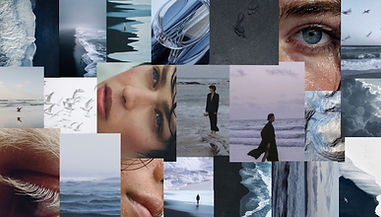
02 | THE MISTY COAST
Black sand, water, ice, reflection, open landscape.

03 | THE BOTANICAL HOUSE
Condensation, glass, humid light, organic structures.
THE FILM
CONCEPT
The film expands the campaign into a more elemental world, moving between protagonist, eyewear and landscape. The journey begins in a state of searching and observation, then gradually narrows into closer, more precise details once the glasses are found.
VISUAL LANGUAGE
Macro observations of water, ice, sand and natural structures echo the frame through shape, repetition, transparency, reflection and material texture. These details create visual parallels to the eyewear without literally reproducing its form.
SOUND + NARRATIVE
The soundtrack begins in a more exploratory, discovery-led mood. Once the glasses are found and put on, the sound becomes more controlled and responsive, with subtle cues tied to blinking, focus, movement and product detail. The narrative moves from world to discovery, into detail and finally back into the wider landscape.


Digital Crafting Workflow

01 | PRODUCT
The process began with a Blender prototype of the temple, followed by material studies and product renders to establish geometry, finishes and recurring details.

02 | IMAGE
Casting, styling, lighting, environments and camera perspectives were developed across multiple iterations, with close attention to character consistency, material behavior and product accuracy.

03 | FINISHING
Final images moved between AI generation and Photoshop, refining skin, branding, textures, optical effects and composition. The same visual system was then carried into storyboard, movement and sound for the film.
